
You have full control over which products you choose to sell on a marketplace using the different Blocking features available. This article will explain how to block and unblock products.
Important: Omnivore does not support blocking a listing by variant SKU alone. If your product has multiple variants, you cannot block just one variation by entering that variant SKU and using the block flow. Please see Excluding Variants from Listing for an alternative option
Ways to Block Products
There are several ways you can block products:
- Block specific products by searching for a product, selecting those products, and then blocking
- Block by product exclusions i.e. keyword, retailer categories, brand, on sale products
- Bulk block a specific list of SKUs
- Block all new products automatically and the unblock them as needed
- Block variants by keyword, including using a Shopify Metafield.
Please Note: If you use any of these blocking features, it is specific to a marketplace. If you want to block a product(s) from all marketplaces you sell on, you will need to repeat the same steps for each marketplace. Except if you use a Shopify Metafield to exclude certain variants, this setup is Site Wide.
How to block/unblock specific products
Follow the steps below to block a single product or multiple single products:
-
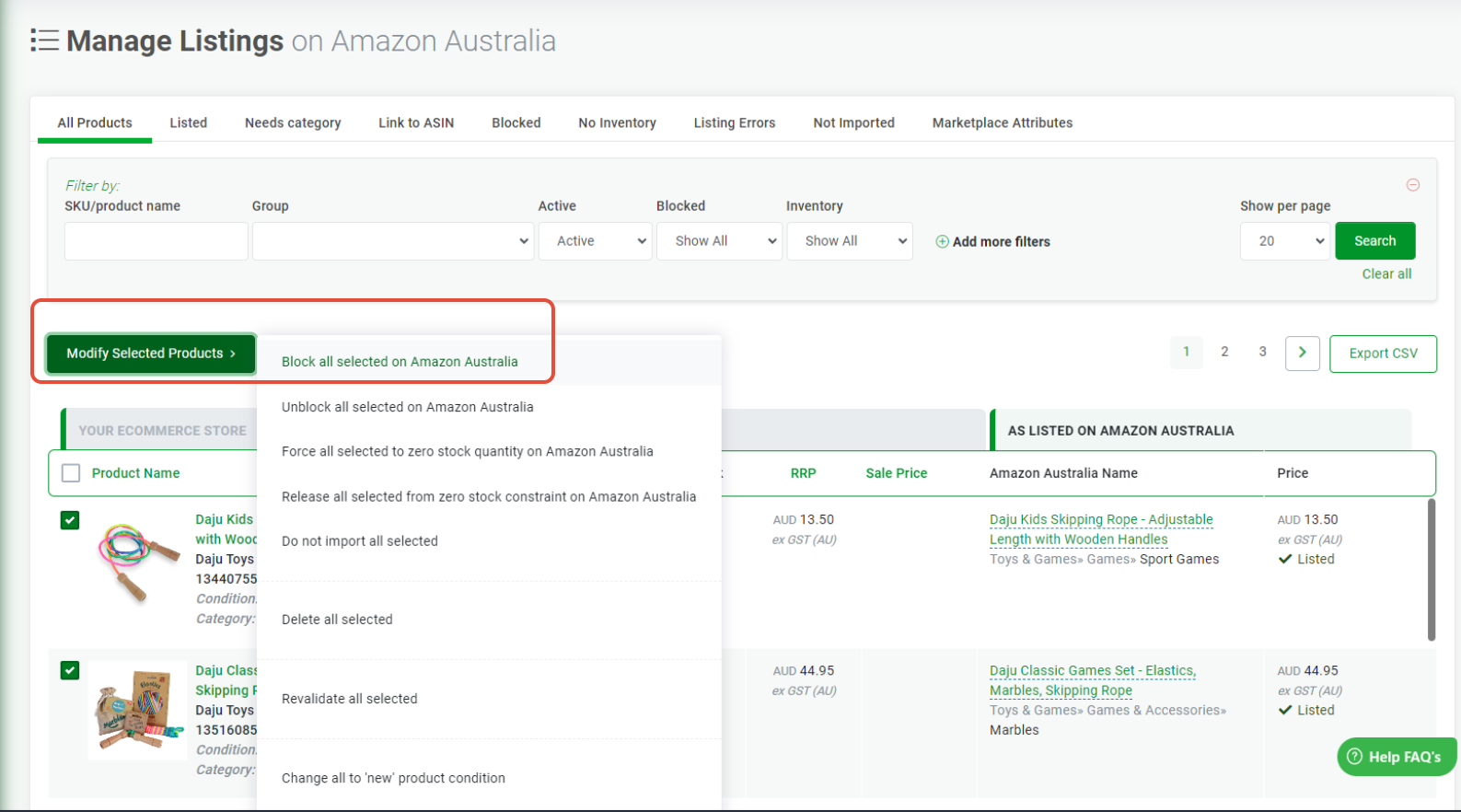
Go to 'Products - Marketplace Name Manage Listings' (or the marketplace you wish to block a product from selling on)
-
Search for the product you would like to block e.g by SKU, keyword
-
Check the check box on the left - you can check all or check individual products.
-
Click 'Modify Selected Products - Block all selected from.. '
-
Products will then show as blocked
-
Follow the steps above to unblock a product.
-
To unblock a product, search for the product as per above, check the box on the left and then from the 'Modify Selected Products' button menu choose 'Unblock from..'.
IMPORTANT:
-
If you block or unblock a product, make sure you go to the Dashboard and click 'Upload to Marketplace' to push any changes to the marketplace.
-
If you DO NOT want to end the listing on eBay (you may want to keep the listing active and keep sales history but stop selling it temporarily) and want to just send an inventory of '0' then from the 'Modify Selected Products' button menu, choose 'Force all selected to zero stock quantity'.
Block by Product Exclusions - keyword, retailer category, brand, on sale, metafields (Shopify)
If you add products to these categories/brands in the future then the products will automatically be excluded and will not list on the marketplace. Note, this blocks at the Product Level.
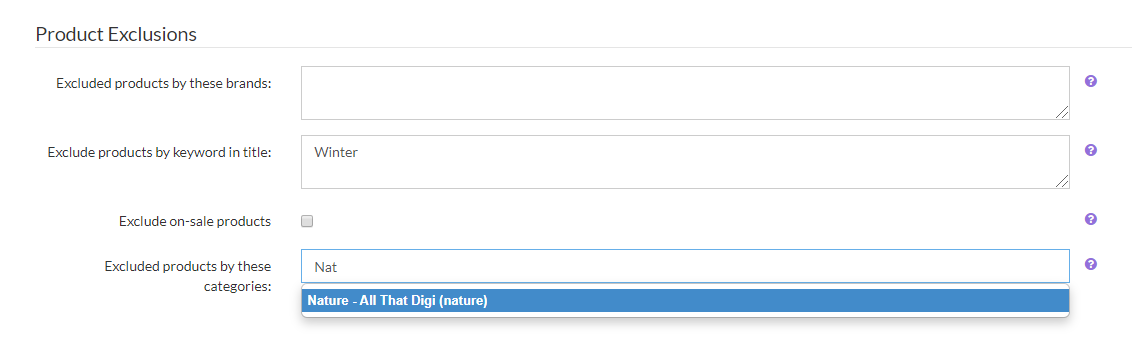
- Go to 'Settings - Marketplace Name - General'
- Scroll down to the 'Product Exclusions' section
- Type in a keyword(s), categories, brands or check the exclude on-sale products box.
- Start typing for auto-suggest.
- On-sale will block products where the Sale price is less than the RRP.
- Click 'Update Settings'
- Go to the Dashboard and click 'Upload to Marketplace' if you need to remove existing listings.
Bulk block/unblock a specific list of SKUs
-
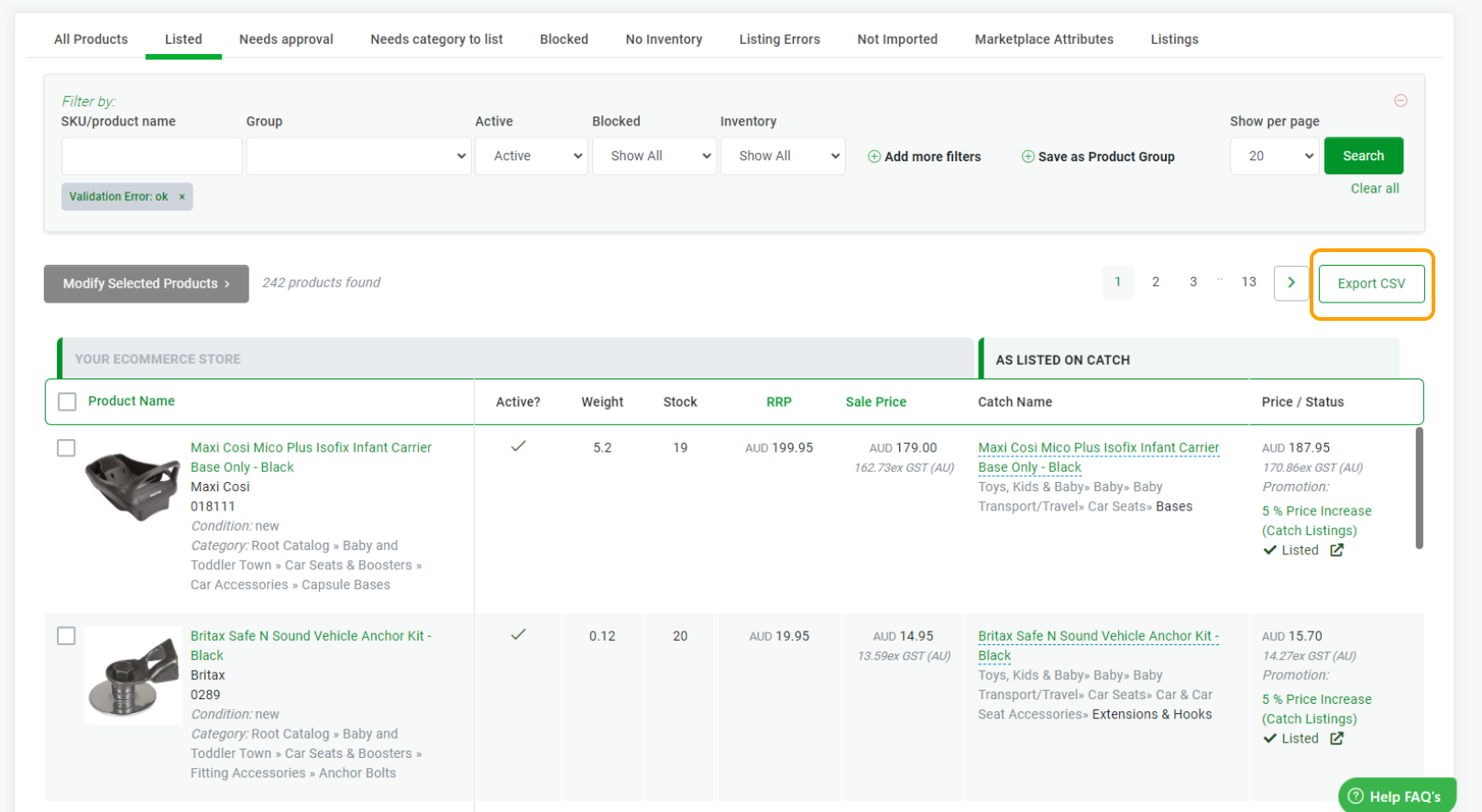
To get started you need a list of CatchFeeder/Trade Runner/Omnivore SKU's you want to block, If you don't have a list, you can generate it via the Export CSV button found under 'Products - eBay Australia (or Marketplace Name) - Manage Listings.
-
Filter what products you want to block/ unblock on your exported CSV.
-
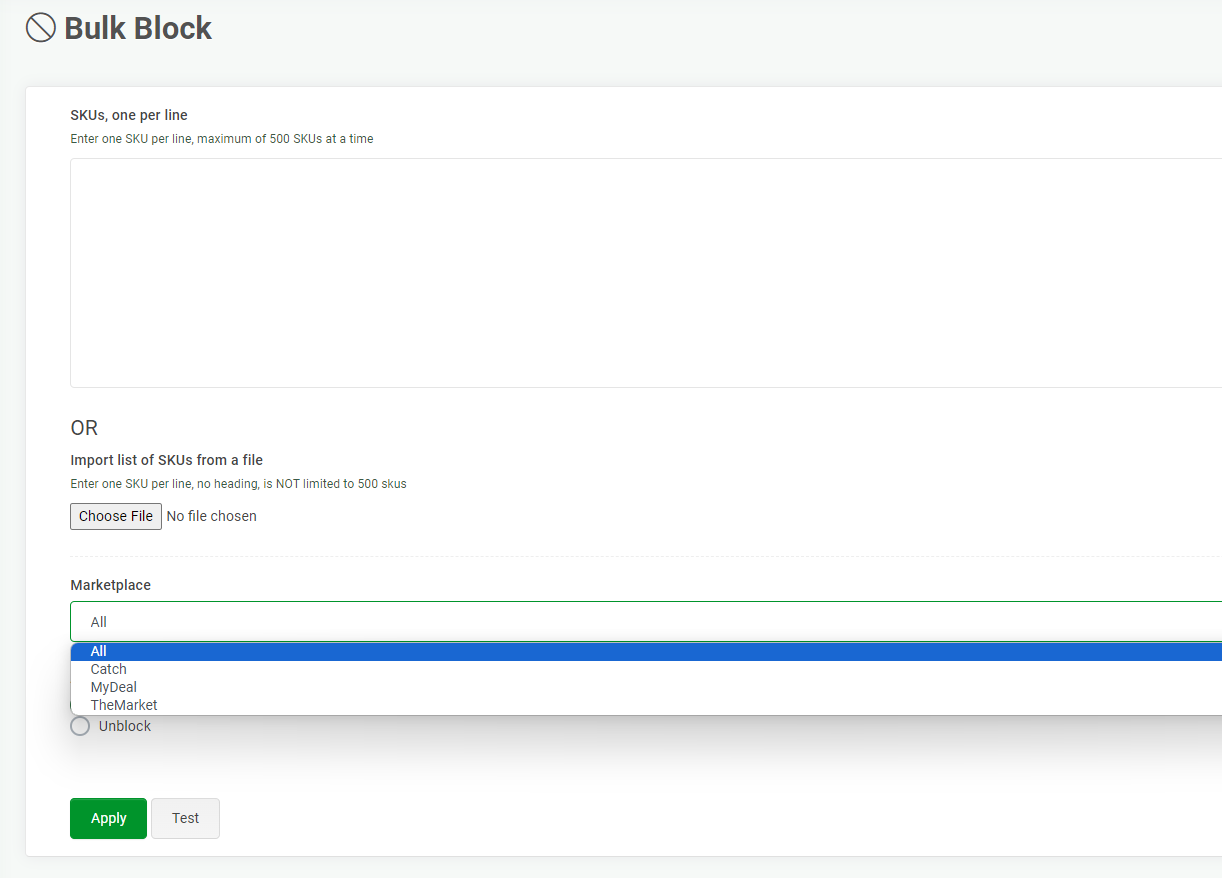
Go to 'Products - Bulk Block'
-
Paste the list of SKUs in batches of 300-500 (any more than this can cause a timeout 504 error). Be sure to paste one SKU per line.
-
You can also Import a list of SKU's that are in a CSV.
-
Click 'Choose File' and navigate to the CSV file on your local machine.
-
Your CSV will need one column called SKU (only)
-
When you choose your file the screen will display the file name. See below.

-
Choose the marketplace - if you want them blocked/unblocked across ALL marketplaces choose All, otherwise, specify.
-
Choose the Action based on if you to Block / Unblock.
-
Click Apply
-
Once completed, make sure you do an upload to the marketplace to ensure the products are blocked/unblocked.
Block new products automatically
In some cases, you may want to block any new products that you've added to your eCommerce store. So when Omnivore Imports them they automatically go into a block listed status.
For example, if you have set up Category Mapping rules which automatically map and list a product in a particular category but anytime you add a new product it's being listed to the wrong category. By blocking all new products automatically you would be able to review and revise the mapping rule that's being applied before the products are actually listed to a marketplace.
Read more:
Excluding Variants from Marketplace Listings
If there are specific product variants that you do not want to sell on marketplaces (for example, an Extra Large size reserved for certain customers, or Wholesale variants), you can exclude them during the product import process from your eCommerce platform. These exclusion settings are applied site-wide.
Exclude Variants Using a Variant Keyword
- In Omnivore, navigate to Settings > Administration.
- Scroll down to Exclude variants with these attributes.
- Enter a keyword that appears in the variants you want to exclude.
- Example: Enter Wholesale to exclude any variant containing the word Wholesale.
- Click Update at the bottom of the page to save your changes.
- Run a Shopify Import in Omnivore to ensure the exclusion changes are synchronized and applied.
Exclude Variants Using a Shopify Metafield
This method is recommended when you want greater control over which variants are excluded.
- Create a metafield in Shopify and apply it to the variants you want to exclude.
- Example:
- Metafield Name: custom.omnivore_exclude
- Metafield Value: exclude
- Example:
- In Omnivore, navigate to Shopify Feed - Map Fields.
- In the Variant Attributes field, use the dropdown menu to map your Shopify metafield.
- This allows Omnivore to import and recognize the metafield value as a variant attribute.
- Run a Shopify Import in Omnivore.
- New metafields will not be visible or available for mapping until a Shopify Import has been completed.
- Once the field has been mapped and imported, go to Settings - Administration.
- In Exclude variants with these values, enter the metafield value that should trigger exclusion.
- Example: exclude
- Click Update to save your changes.
- Run another Shopify Import in Omnivore to apply the exclusion rule.
Screen Shots
Omnivore - Settings - Administration - Product Import - Exclude Variants with these values:

Omnivore - Settings - Shopify Feeds - Map Fields - Variant Attributes

Important Notes
- Both exclusion methods are applied site-wide.
- Whenever you add, remove, or update an exclusion rule, you should run a Shopify Import in Omnivore to synchronize the changes.
- Shopify metafields must be imported into Omnivore before they can be viewed, mapped, or used in exclusion rules.
- Exclusion using a Variant Keyword present in the variant.
- Exclusion using a Shopify metafield keyword, which is surfaced as an Omnivore attribute and can then be referenced in exclusion rules.
- When adding a metafield in Shopify, be sure to perform a Shopify Import in Omnivore. This imports the new field into Omnivore, making it available for mapping. New metafields cannot be viewed or mapped in Omnivore until the import has been run.
Go to the Dashboard and click 'Import from eCommerce store' to create a full import sync from your website to remove the blocked variants.
Can I block a single variant by variant SKU?
No.
Key Points to ensure Success & other Articles
-
Whenever you Block/Unblock you need to go to the Dashboard and click 'Upload to Marketplace' to remove any products that are listed. Quick easy block/unblock Block one or more products from listing
-
Whenever an exclusion is added or updated using either method, a Shopify Import must be run in Omnivore to ensure the changes are synchronized and applied correctly.