
Internal FAQ
Please read this FAQ fully before you proceed. You may want to consider this article written by our Dev Team.
Introduction and Overview
This article includes setup with technical and configuration instructions. The Lasoo Marketplace is engineered by Marketplacer. Some of the setup steps in Omnivore are customised and differ from other mainstream markets.
Before you begin please be aware of the following points:
- To sell on the Lasoo Market using Marketplacer there must have an active and approved selling account. To confirm please check with the onboarding team at the Lasoo Marketplace.
- Lasoo have very specific Shipping Setup Requirements that involve specialist assistance.
- Retrieve the API Key from the Lasoo Marketplacer team.
- With these points in mind the setup in Omnivore can continue.
Lasoo has a seller-facing setup guide in the Support Portal. It is with all of the other setup guides and checklists. There is also a folder called Selling on Lasoo https://support.omnivore.com.au/lasoo
Setup & Configuration
Note, the steps below include: Adding The Marketplace - Refreshing Brand & Categories - All fields on the Settings - General Page in Omnivore. Step 1-12 must be done first and are best done in order.
- Add the Lasoo API Marketplace (NOT the Lasoo marketplace) into the Omnivore instance. To do this, navigate to the Settings, Marketplaces page in Omnivore, select Create Link and Config.
- When the marketplace has been added, you will see the Lasoo API tab in Omnivore. Click Settings - Lasoo API - General to view the Connection and Advanced Settings section.
- On this page, add the API Key Credentials retrieved from step 3 above.
- Scroll down and click Update and Check Connection.
- Brand & Category Retrieval and Update Steps. See the article above to 'Retrieve Brands allowed for the seller' (written by dev).
- To begin this process in Omnivore, navigate to Retailer Admin - New Dashboard - see Marketplacer rest api - click 'Download Brands create/update Marketplace Brands'.
- This process can take a few seconds to complete so if nothing appears to change on the screen give it time.
- When this job is complete it will display a screen like this - done, active brands = 992.
- This step can be repeated if you are also just updating brands for Lasoo.
- Navigate to Marketplace Admin - Marketplaces - View Brands to check that the brands have been imported for that new marketplace you just added. For more required Brand Settings for Lasoo, see Brand Setup below.
- While on that same page in step 8 click Refresh Categories for that newly added market.
- Order Number Prefix, see full explanation below under 'Order Settings'.
- If necessary, import your products from your eCommerce Store. The e.g. below shows the Import from Shopify. If there are other marketplaces already active in Omnivore you don't need to do this step.
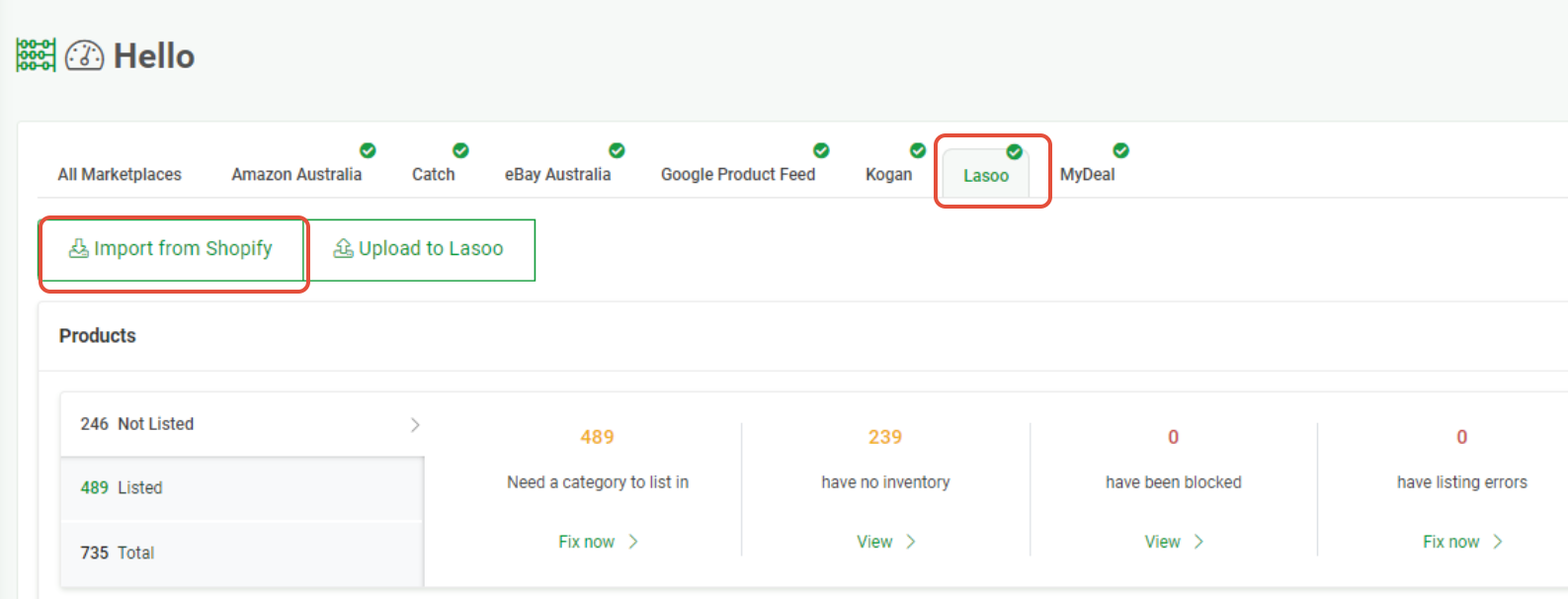
- At this stage, you are connected to the Lasoo Marketplacer Operator but you are still in setup mode so product feeds, syncing, and uploads have not started yet.
Summary of Settings
- Product Identifiers: if ticked we will not send UPC or Barcode data to the market.
- Max Stock Quantity: used to define the max stock quantity we will push to the market.
- Validate Product Attributes: this does not need to be ticked for the Lasoo Marketplace if you are not mapping categories.
- Use Map Brands: please see Brand Section below.
- Use Shipping Profiles: More information on Shipping Setup below.
- Prefix Order Number: this must be ticked by default. This will insert the word 'lasoo-' at the beginning of each order number.
- Use GraphQL: obtain the seller GRAPHQL id from the Lasoo Team.
Important: Any changes made to the Advanced Product Settings have to be saved by clicking Update at the bottom of the page. During the setup phase a marketplace category refresh within Omnivore must also be completed (part of steps 10 and 11 above).
Required Check List
Decide Which Products to List
- Omnivore has the function to Block and Exclude Products from listing, this means you can pick and choose what to list by blocking and unblocking products.
- For more information on Blocking and Excluding click here.
- Once you decide which products to list on Lasoo and we push them up in the feed, they will need to be mapped to a category within Lasoo, and they will be checked, approved and published by Lasoo. The published status then means they are online, they have an advert ID (listing ID) and they are purchasable. These listing status's are applicable to the Lasoo marketplace.
Order Settings
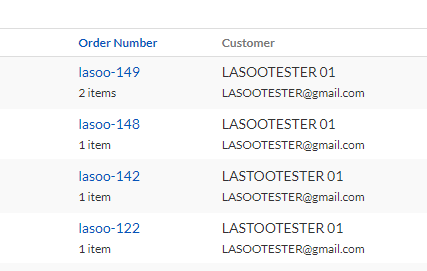
Within the Omnivore go to Settings - Lasoo - General, the field called called 'Prefix Order Number'must have a value entered. Whatever value is added to this field must also have a - on the end.
Eg lasoo- will prefix the order number with that value. So your order reference number will be formatted like this example: lasoo-148 .
Shipping Setup
There are two options for Shipping Setup:
Shipping Profiles from the Marketplace OR Shipping Policies setup with Omnivore.
Note: Lasoo Marketplace has very specific Shipping Requirements.
Follow this article for the setup options.
Brand Options
There are two brand options which are, Map Brand OR Brand Slug. Unlike most other marketplacer marketplaces Map Brand is the default setting for Lasoo
Map Brands: This is the default brand setting for Lasoo. If the 'Send the value as Map Brands' field is ticked in Omnivore this means the retailer brand we send to the Marketplace has to be mapped on the Marketplace side, this is done by the Marketplacer Team or the retailer.
OR
Brand Slug: In this case we send a brand list to the Marketplace, once that brand list is in the Marketplace's Database we then reimport the brand list with any changes made by them. The reimported Brands in Omnivore now match what the Marketplace has. No further steps by the retailer or Omnivore are required.
Category Mapping
- Category Mapping is completed within Lasoo, it does not have to be applied within Omnivore. Products in Omnivore will appear to be not mapped and this is ignored by us due to the mapping being completed on the marketplace side.
Product Identifiers
- This includes GTINs, UPC and EAN; the general rule on if product identifiers are required is defined by the marketplace. Omnivore imports product identifiers from the eCommerce Store, if the data is not required we do have functions to not send that type of data. For Marketplacer Markets this settings is on Settings - Lasoo - General - Product Identifiers.
Start Selling
- While setting up Lasoo in Omnivore the integration is in Setup Mode, this means that feeds, syncs and uploads have NOT commenced yet. As you complete the many setup steps Omnivore will automatically reveal the Start Selling button on the Dashboard. In order for you to go live on the Marketplace you must hit Start Selling. There are checks and tests that we recommend before Start Selling is activated.